


Every Lithuanian has a Palanga story: a first summer love, a sunburn, a night on Basanavičiaus Street, an evening on the pier when the whole town turned towards the sea to watch the sun go down. The resort is only about 30 km north of Bohema, so you can live a little of that story yourself in a single day – and in the quiet months you will have the pine park and the beach almost to yourself.
Getting there: bus 31 from Klaipėda bus station, about 30 minutes, €2.50 with a contactless bank card; by car about 30 minutes.
Time needed: a full day, ideally ending with the sunset on the pier.
Amber Museum: €8 in summer, €6 the rest of the year; closed on Mondays; free for everyone on the last Sunday of the month.
Best time: June to August for the full resort buzz; May, September and October for calm beaches and easy parking.
Getting to Palanga
By bus
The easiest way is regional bus No. 31 (Klaipėda – Palanga – Palanga Airport). It leaves from platform 6 of Klaipėda bus station, a 30-minute walk from the hotel, and reaches Palanga bus station in about half an hour. There are around twenty departures a day, the first at 06:30. Tap a contactless bank card on the validator as you board or buy a ticket in Klaipėda's public-transport app – either way the fare is €2.50; cash to the driver costs €3. Intercity buses also stop in Palanga; their tickets are sold at autobusubilietai.lt.
Plan the return before you set off. In the current timetable the last bus 31 leaves Palanga at about 22:30–22:45, and in June and July the sun sets at around 22:15 – with the bus station a 30-minute walk from the pier. For a midsummer sunset, take a taxi back or come by car. Live timetables are on stops.lt.
By car
The drive takes about half an hour along the A13. From 15 May to 15 September Palanga's streets are paid parking every day from 07:00 to midnight: €2.20 an hour in the green zone closest to the sea, €1.60 in the red zone and €0.80 in the yellow one. You can pay at the meters or with the uniPark, Flowbird, carOne or ParkMan apps. Outside the season only a few central streets are paid (€1 an hour, 08:00–20:00). The large free car park by the Palanga sports arena is a 25–30 minute walk from the sea.
By bike
The coastal cycle path runs about 27 km from Klaipėda through the pine forests of the Seaside Regional Park – see our cycling guide from Klaipėda to Palanga. Just note that bikes are not allowed inside Birutė Park: lock yours up at the entrance.
Palanga on one map
The walk below starts at the bus station and ends on the pier – about 5.6 km in total, with every stop worth a pause. The times under each stop are by car from Bohema.
- Google MapsApple MapsWaze
- Google MapsApple MapsWaze
- Google MapsApple MapsWazeWebsite
- Google MapsApple MapsWaze
- Google MapsApple MapsWazeWebsite
- Google MapsApple MapsWaze
- Google MapsApple MapsWaze
- Google MapsApple MapsWazeWebsite
The Amber Museum in the Tiškevičiai Palace
The white palace in the middle of the park was built in 1897 for Count Feliksas Tiškevičius to a design by the Berlin architect Franz Heinrich Schwechten. Since 1963 it has been the Palanga Amber Museum, part of the Lithuanian National Museum of Art and one of the most visited museums in the country. Its collection runs to around 30,000 pieces – among them one of the world's largest collections of amber inclusions: insects, spiders and plants caught in resin tens of millions of years ago.
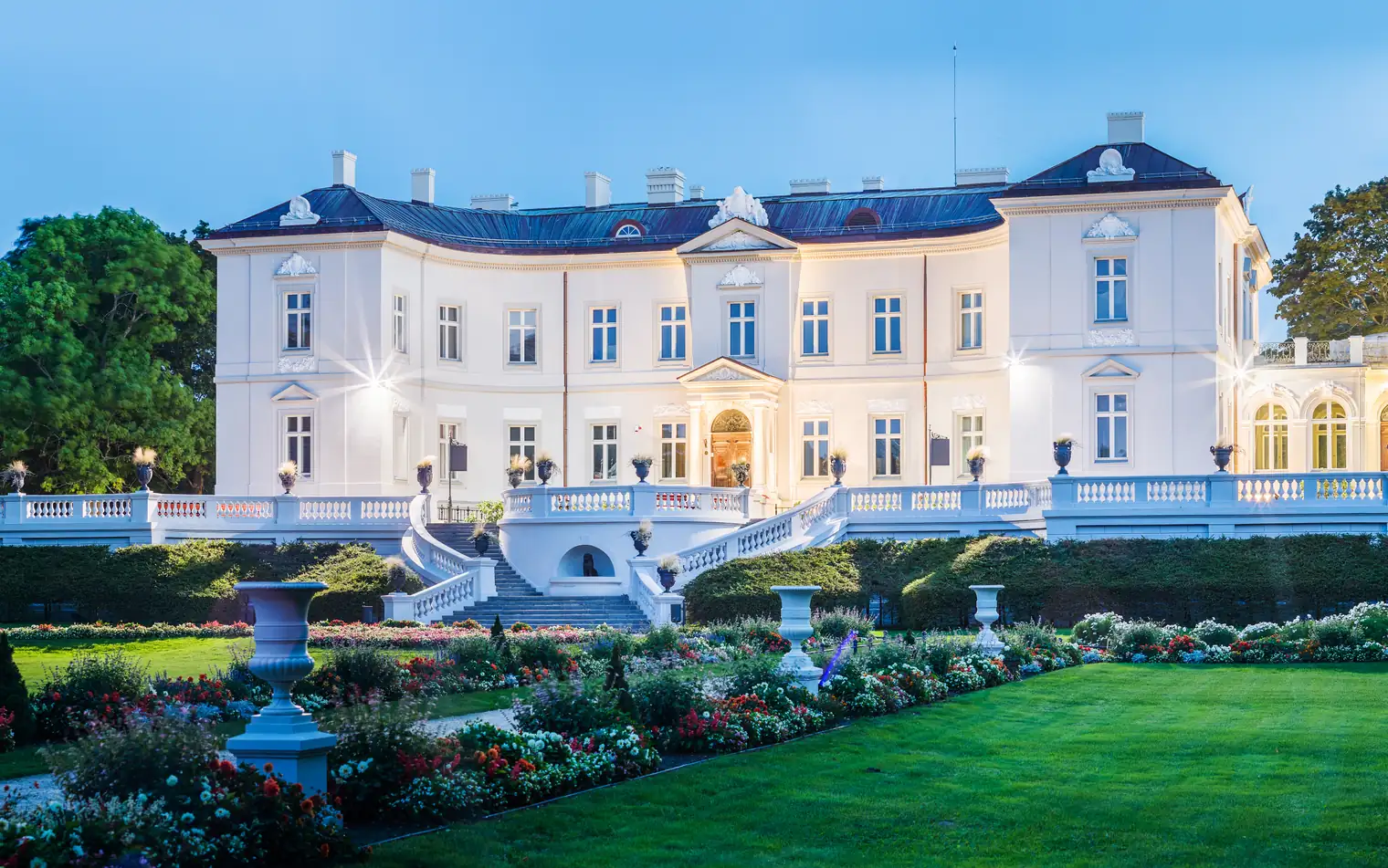
Look out for the Sun Stone, a single lump of amber weighing about 3.5 kg and one of the largest in Europe – it has been stolen twice. The ground floor is dedicated to the Tiškevičiai family, the basement has a play space for children, and the Balzac Café inside the palace is a pleasant place for coffee.
- Opening hours: 15 May – 15 September, Tuesday–Saturday 10:00–20:00 and Sunday 10:00–19:00; the rest of the year Tuesday–Saturday 10:00–18:00 and Sunday 10:00–17:00. Closed on Mondays and public holidays.
- Tickets in 2026: €8 in summer and €6 the rest of the year; reduced tickets for pupils, students and pensioners cost half. Entry is free for everyone on the last Sunday of each month.
- Tip: arrive at least an hour before closing, as the ticket office stops selling earlier. Tickets can be bought online at bilietai-pgm.lndm.lt.
Birutė Park and the legend of Birutė Hill
The palace stands in a 100-hectare park laid out at the end of the 19th century by the French landscape architect Édouard François André and his son René. Paths wind through an old pine forest, past ponds, a rose garden and the great flower parterre in front of the palace. It is a park for quiet walks: no bicycles, no scooters and no picnics on the grass. On summer evenings – Thursday to Saturday at 18:30 – the Palanga brass orchestra plays free concerts in the park rotunda.
Eglė, Queen of Serpents
Near the main entrance stands Robertas Antinis's bronze of Eglė, the heroine of Lithuania's best-loved folk tale. Eglė married Žilvinas, the Serpent King, and lived happily with him under the sea until her brothers killed him; in her grief she turned herself and her children into trees. Eglė means spruce – which is why, they say, spruces tremble in the wind.
Birutė Hill
The pine-covered dune at the south end of the park rises 21 metres above the sea. Legend says Birutė, a priestess who guarded the sacred fire here, caught the eye of Grand Duke Kęstutis, became the mother of Vytautas the Great and was buried on this hill. Archaeologists have found a Curonian castle and a 14th–15th-century sanctuary that doubled as an observatory. The small neo-Gothic chapel on the top dates from 1869, and at the northern foot of the hill there is a Lourdes grotto. Climb up for the view of the sea through the pines.
Three small museums worth an hour
- Antanas Mončys Art Museum (S. Daukanto g. 16) – a museum where touching the sculptures is not just allowed but encouraged, as the émigré modernist Mončys wished. Children love it, and the Fairy Tale Park is next door. Wednesday to Sunday; tickets around €4.
- Palanga Resort Museum (Birutės al. 34A) – how a fishing village became a fashionable resort, from Viking-age traders to the Tiškevičiai counts. €5.
- Jonas Šliūpas Museum (Vytauto g. 23A) – the wooden villa of Palanga's first mayor, now a lively space for talks and exhibitions. Wednesday to Sunday, €4.
Basanavičiaus Street, the Kurhaus and the pier
Palanga's social life began at the Kurhaus, the resort hall Count Juozapas Tiškevičius built around 1877 with a restaurant, a reading room and dances. It burnt down in 2002, and the restored building reopened in 2021; today it houses the town's cultural centre. From here J. Basanavičiaus Street – named after the father of the Lithuanian national revival, who visited Palanga in 1924 – leads to the sea through cafés, amusement rides and a Ferris wheel more than 40 metres high.
At the end of the street is the pier. The counts first built it in the 1880s as a dock for shipping bricks from their brickworks, but sand soon made it useless for ships, and from 1892 it became the resort's promenade. Today's 470-metre pier dates from the late 1990s and is open around the clock, free of charge. By the entrance stands the sculpture of Jūratė and Kastytis: the sea goddess who fell in love with a fisherman, until the thunder god Perkūnas shattered her amber palace. The amber you find on the beach, the story goes, is what remains of it.
When is the sunset?
Seeing the sun off from the pier is something of a ritual in Palanga – on summer evenings it seems the whole town walks out to the end to watch the sun touch the water. Approximate sunset times:
- Mid-June: around 22:25 – the latest of the year.
- Mid-July: around 22:15.
- Mid-August: around 21:15.
- Mid-September: around 19:55.
- Late October: around 18:20, then an hour earlier once the clocks go back on the last Sunday of the month.
- December: just after 16:00.
From September onwards the sunset fits easily before the last bus home.
A day in Palanga, hour by hour
- 09:00 Walk or take a taxi to Klaipėda bus station and catch bus 31.
- 10:00 From Palanga bus station, walk down Vytauto Street past the Sculpture Park to the entrance of Birutė Park and the statue of Eglė.
- 10:30 The Amber Museum – allow a good hour and a half, then coffee at the Balzac Café.
- 12:30 Birutė Hill, the chapel and the sea view through the pines; a dip at the park beach in summer.
- 13:30 Lunch in the centre – something Lithuanian, see our guide to Lithuanian food.
- 15:00 Touch the sculptures at the Mončys museum, or the Resort Museum on a rainy day.
- 16:30 The Kurhaus, Basanavičiaus Street and the beach.
- Sunset On the pier, by Jūratė and Kastytis. Then the bus or a taxi back to Klaipėda.
With a car: add Šventoji
Twelve kilometres further north, Šventoji is Palanga's quieter sibling. Cross the swaying Monkey Bridge over the Šventoji River (built in 1973), see the Žemaičių Alka – twelve oak pillars on a dune, a reconstruction of the ancient observatory on Birutė Hill – and look up at the red, 39-metre lighthouse. The beach there is wide and much calmer than Palanga's.
Palanga out of season
From mid-September to mid-May Palanga changes completely: the museums keep their doors open six days a week, most parking is free, and you can walk for kilometres along an empty beach. In early February the town hosts the Palanga Smelt Festival (Palangos stinta), when Basanavičiaus Street turns into a fish market and anglers compete off the end of the pier. After winter storms, the sea sometimes washes small pieces of amber onto the beach – look along the tideline.
Frequently asked questions
How do I get from Klaipėda to Palanga without a car?
Take regional bus 31 from platform 6 of Klaipėda bus station. The trip takes about 30 minutes and costs €2.50 when you tap a contactless bank card; there are around twenty departures a day.
Is the Palanga Amber Museum open on Mondays?
No. The museum is closed on Mondays and public holidays. From Tuesday to Saturday it opens at 10:00 and closes at 20:00 in summer and 18:00 the rest of the year; on Sundays it closes an hour earlier.
How much does the Amber Museum cost?
In 2026 a ticket costs €8 from 15 May to 15 September and €6 the rest of the year, with reduced tickets at half price. On the last Sunday of each month entry is free for everyone.
How long is Palanga pier?
The pier is 470 metres long. It is open around the clock and free, and it is the town's favourite place to watch the sunset.
Where can I park in Palanga?
From 15 May to 15 September central streets are paid from 07:00 to midnight (€0.80–2.20 an hour depending on the zone), payable at meters or by app. Out of season most parking is free. The free car park by the sports arena is a 25–30 minute walk from the sea.
Is Palanga worth visiting in autumn or winter?
Yes. The museums stay open, parking is easy, the beaches are empty and the early sunset fits comfortably before the last bus. In early February the Smelt Festival fills the main street.
Further reading
- Cycling from Klaipėda to Palanga
- The best beaches in and around Klaipėda
- Getting to Klaipėda and getting around
Back to Bohema for the night
Palanga is wonderful by day, but many travellers prefer to sleep in Klaipėda: the city is livelier out of season, restaurants stay open later, and the next morning the ferry to the Curonian Spit is a short walk away. At Bohema, an art hotel on the edge of the Old Town, you can choose from nine different room types.
Sources: Palanga Amber Museum – visiting, Palanga Tourism Information Centre, Palanga Botanical Park, Klaipėda public transport fares, Palanga parking, Antanas Mončys Art Museum, Palanga Resort Museum. Prices and hours checked in October 2026. Photos: Michael Kuhn (CC BY 4.0), Diliff (CC BY-SA 3.0), Wikimedia Commons.

