


An hour south of Klaipėda the land goes flat and wet. The Nemunas splits into the Atmata, Skirvytė, Pakalnė and Gilija before reaching the lagoon, and every spring it floods some 400 square kilometres of meadows. This is the Nemunas Delta Regional Park – a wetland of international importance where more than 300 bird species have been recorded, and where millions of birds pass along the coast in autumn. Bring binoculars, a full tank and a sense of adventure: few visitors to Klaipėda come this way, and that is part of the charm.
By car: the whole loop is about 190 km, roughly 3 h 45 min of driving – plan a full day.
Ventė Cape: 52 km, about an hour from the hotel; the bird-station museum costs €4 for adults.
Best seasons: September to mid-October for migration; late March and April for floods and swans.
Bring: binoculars, layers for the wind, and insect repellent in summer.
The loop on one map
From Bohema along the lagoon to Ventė Cape, then inland through Minija, Šilutė and Rusnė, and back. Times under each stop are by car straight from the hotel.
- Google MapsApple MapsWazeWebsite
- Google MapsApple MapsWaze
- Google MapsApple MapsWazeWebsite
- Google MapsApple MapsWazeWebsite
- Google MapsApple MapsWazeWebsite
- Google MapsApple MapsWazeWebsite
- Google MapsApple MapsWazeWebsite
Ventė Cape: where the birds turn
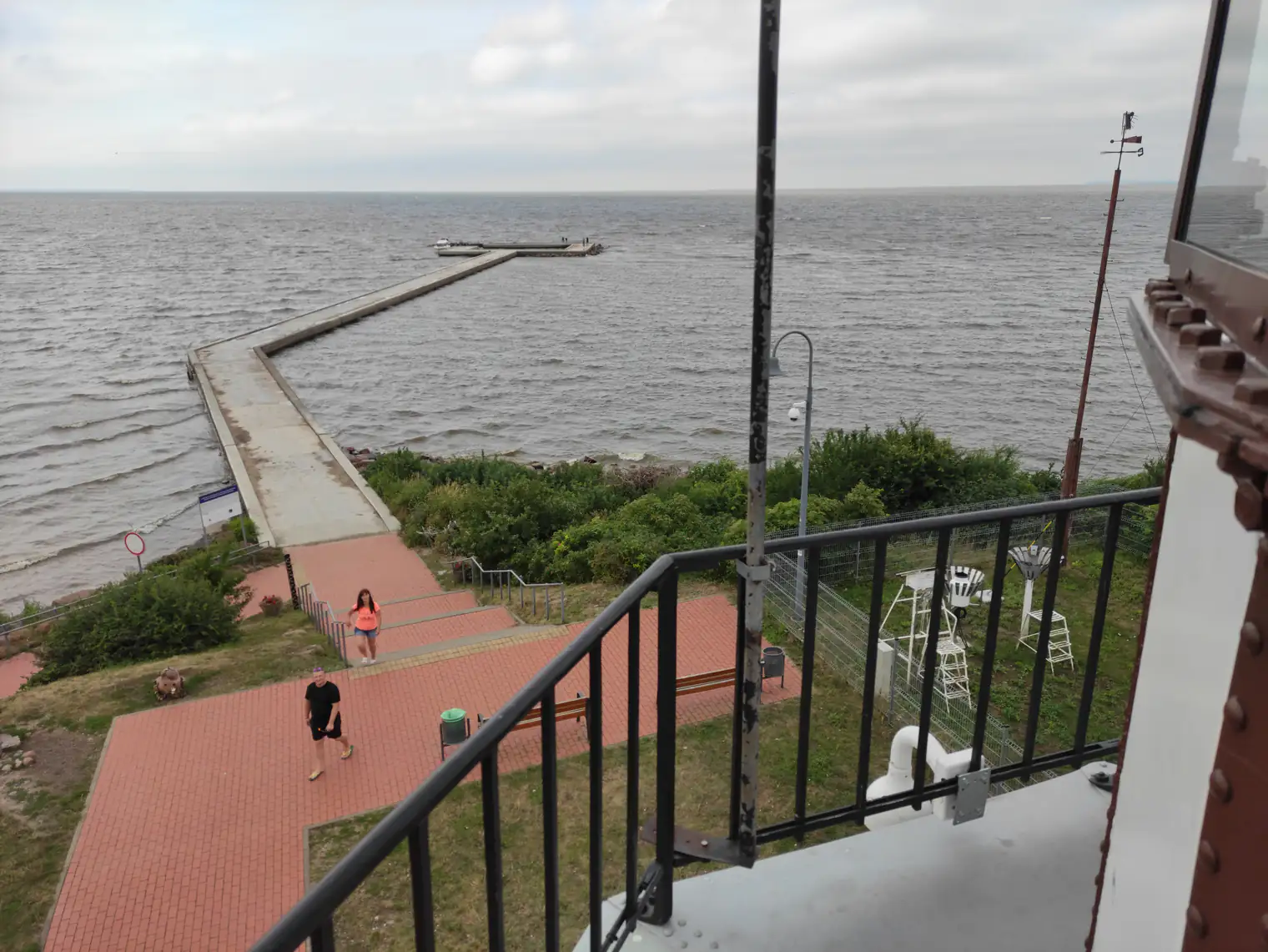
Ventė Cape is a narrow peninsula pushing into the Curonian Lagoon. In the 14th century the Teutonic Knights built a castle here, Windenburg – “the castle of winds” – but the waves destroyed it and a later castle and church; their stones went into the church at Kintai in 1705. Today the cape is protected by a stone breakwater 250 metres long.
The cape lies on Lithuania's main bird-migration route. On peak days in September and October, more than two million birds pass along the Lithuanian coast; most follow the Curonian Spit, but a fifth to a third turn along the lagoon shore – straight over Ventė.
The bird-ringing station
The lighthouse keeper Mikas Posingis was the first to notice how many birds crossed the cape. In 1929, on the initiative of Professor Tadas Ivanauskas, Lithuania's first ornithological station opened here – one of the first bird-ringing stations in Europe still at work. Its giant traps, including the zigzag trap designed in 1982 that catches birds from both sides, are among the largest in the world. Tens of thousands of birds are ringed every year – over 105,000 in the record year 2003 – and Ventė rings have turned up as far away as Iran, Egypt and South Africa.
- Museum: the history of bird ringing and of migrating and wintering birds. Adults €4, reduced €2, children under 6 free; a guided tour costs €25 per group (book on +370 690 90727).
- Opening hours: daily from 10:00, closing between 16:00 in winter and 20:00 on summer weekends; check the month on zoomuziejus.lt.
- The lighthouse: the red-brick tower from the 1860s is only 11 metres high, but its old wrought-iron staircase leads to a balcony with views over the lagoon, the Curonian Spit and Rusnė.
Minija: the “Lithuanian Venice”
Ten minutes east of the cape lies Minija, a fishermen's village first recorded in 1540. Its main street is the river itself: the houses stand on both banks facing the water, and there is no bridge between them – locals still cross by boat. The village flooded so often that it never had a cemetery of its own; the dead were taken to Ventė for burial. Walk the riverbank, have coffee at Mingės egzotika and, in summer, take a boat out.
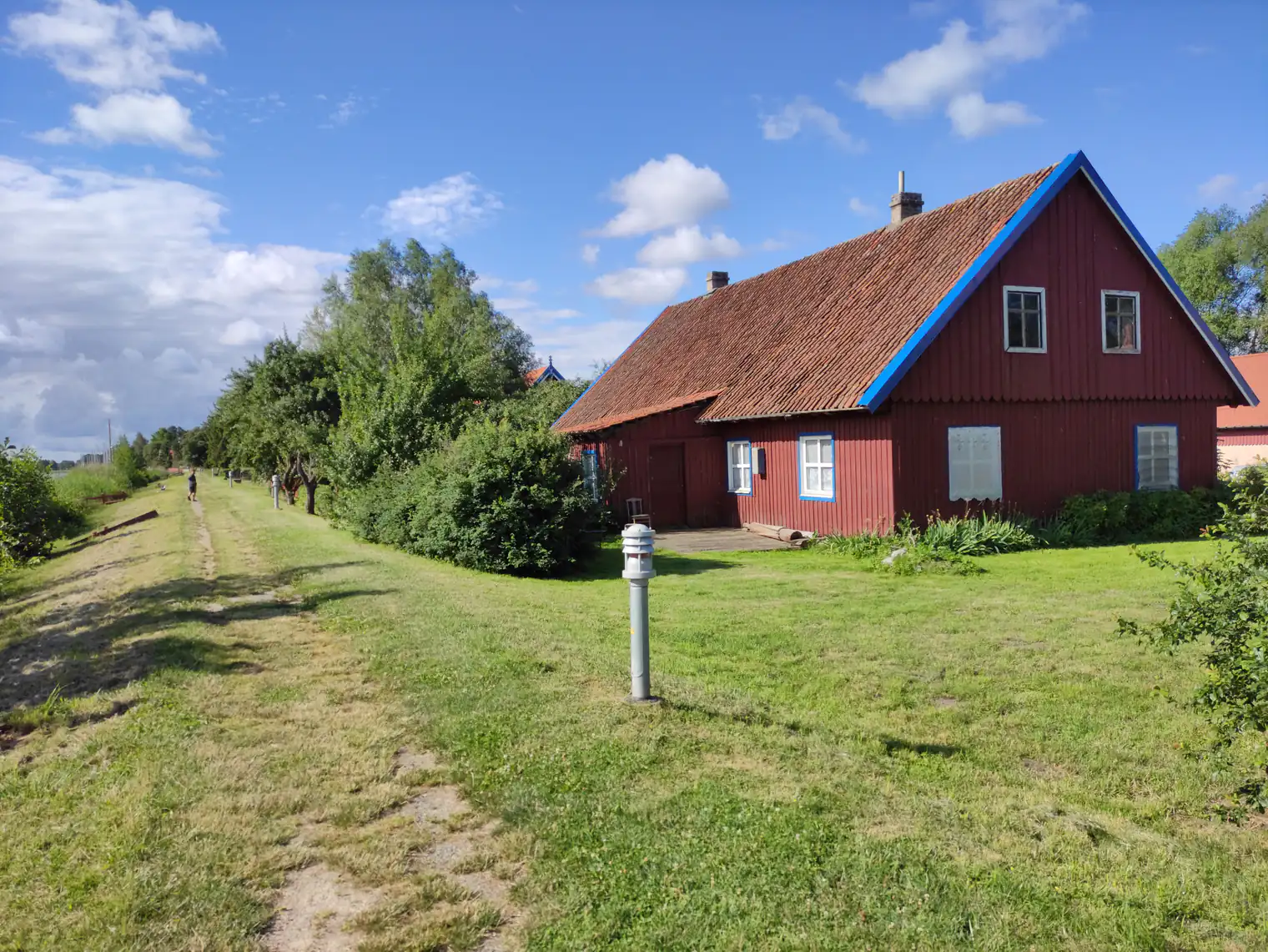
Just north, Krokų Lanka – a lake cut off from the lagoon by river sediment, its surface slightly below sea level – has a bird tower on its western shore. Legend says a black cloud once roared “My name! My name!” over the haymakers until an old man guessed “Krokų Lanka!” and the cloud fell down as a lake.
Šilutė and the bridge over nothing
In Šilutė, the Hugo Scheu Museum occupies the restored manor of the man who began collecting the folk culture of the Klaipėda region's Lithuanians at the end of the 19th century – it was the region's first museum. Entry to the manor exhibitions costs just €1; the tourist information centre in the same building knows about floods and boats. On the road to Rusnė you cross the President Grinius Bridge of 1926: thirteen concrete arches over dry meadows, built only to let the spring floodwater through.
Rusnė: an island town below sea level
Rusnė Island, about 46 square kilometres between the Atmata and the Skirvytė, is often called Lithuania's largest island – and Rusnė is said to be the only town in the country built on an island. Near here, 0.27 metres below sea level, is the lowest point in Lithuania. A single bridge over the Atmata leads in, and since 2019 a raised causeway keeps the road open during the floods. The far bank of the Skirvytė is already Russia.
- Nemunas Delta Visitor Centre (Kuršmarių g. 13) – an exhibition on the delta's birds with a chair that simulates flight. Tuesday to Friday 9:00–18:00, Saturday 10:00–15:00.
- The Lutheran church of 1809–1827, and a monument to Mahatma Gandhi and his friend Hermann Kallenbach on the Atmata embankment.
- Skirvytėlė – a street of old log houses clad in boards, a protected heritage village.
- The legend: Rusnė was the Nemunas's favourite daughter, carried off by Vakaris, son of the wind god; her children Atmata, Skirvytė, Pakalnė, Vorusnė and Vytinė gave the delta's rivers their names.
From Rusnė a dead-end road leads to the Uostadvaris lighthouse of 1873–1876, an octagonal red-brick tower beside the first steam polder pumping station in Lithuania (1907). The station is privately owned and access is limited, but the setting at sunset is worth the detour.
What you'll see each month
- Floods and swans The spring flood starts at the end of March and turns farmsteads into islands; up to 4,000 whooper swans gather on the flooded meadows. Check road conditions with the Šilutė tourist office.
- Breeding season Many rare species nest in the delta – listen for cranes and look for the aquatic warbler in the sedges.
- Black terns and boats Up to 15,000 black terns gather in the delta in July and August, and summer boats cross the lagoon to Nida.
- Migration at Ventė September and the first half of October are the peak of the autumn migration – the busiest time at the ringing station.
- Bird Rally Every October birdwatchers compete in a bird-counting rally across the delta.
- Ice and smelt In cold winters anglers fish for smelt through the lagoon ice – watch from the shore.
A suggested day
- 08:30 Leave Bohema for Dreverna (35 minutes) and climb its 15-metre tower for the first view across the lagoon.
- 09:30 Kintai: the lagoon-shore tower and the church built from Ventė's stones.
- 10:30 Ventė Cape: the ringing station, the traps and the lighthouse. Lunch nearby.
- 13:30 Minija village and the Krokų Lanka bird tower.
- 15:00 Šilutė: the Hugo Scheu Museum.
- 16:15 Over the Grinius bridge to Rusnė: the visitor centre, Skirvytėlė and the riverbank.
- 17:30 Optional detour to the Uostadvaris lighthouse, then about an hour and a quarter back to Klaipėda.
By boat to Nida
In summer you can combine the delta with the Curonian Spit: the boat Ventainė sails from Ventė to Nida in about 80 minutes (€20 one way for adults), and boats from Minija and Uostadvaris also cross to Nida. Season dates are not always published in advance, so book ahead on ventaine.lt. The Šilutė–Nida boat no longer runs from 2026.
Where to eat
Smoked fish from the lagoon – eel, bream and smelt – is the local speciality. The tourist office of Šilutė lists restaurants at Ventė Cape (Ventragis, next to the bird station, and Ventės žuvelė), in Minija (Mingės egzotika) and in Rusnė (Prie Peterso tilto and a fish bar on Upės Street).
Frequently asked questions
How far is Ventė Cape from Klaipėda?
About 52 km by car, roughly an hour from Bohema. There is no convenient public transport; a car is the realistic option.
When is the best time to see bird migration at Ventė?
September and the first half of October. In spring, late March and April are best for the floods and the whooper swans.
How much does the Ventė ornithological station cost?
€4 for adults and €2 reduced; children under 6 enter free. A guided tour costs €25 per group and should be booked by phone.
Why is Minija called the “Lithuanian Venice”?
Because the river is the village's main street: houses face the water on both banks and there is no bridge, so locals cross by boat.
Is Rusnė really on an island?
Yes. Rusnė lies on Rusnė Island, about 46 square kilometres, often called the largest island in Lithuania. Nearby is the country's lowest point, 0.27 metres below sea level.
Can I drive to Rusnė during the spring floods?
Since 2019 a raised causeway keeps the Šilutė–Rusnė road open during the floods, but other low roads and farmsteads can be cut off. Check with the Šilutė tourist information centre in March and April.
Further reading
- Nida and the Curonian Spit: a day trip
- The Cold War Museum and Žemaitija National Park
- Getting to Klaipėda and getting around
Start early from Bohema
Birds and early risers go together. Park at the hotel the night before, set off at dawn and be at Ventė Cape before the day's first ringing round – then come back to the Old Town for a well-earned dinner. See our rooms.
Sources: Ventė Cape Ornithological Station – Tadas Ivanauskas Zoology Museum, Ventė ringing station – history, Šilutė Tourism Information Centre – Nemunas Delta, State Service for Protected Areas, Hugo Scheu Museum, Ventainė boat to Nida, Wikipedia: Rusnė Island. Checked in October 2026. Photos: Baltictrails, Karel Frydrýšek, Karel Frydrýšek (CC BY-SA 4.0), Wikimedia Commons.

